


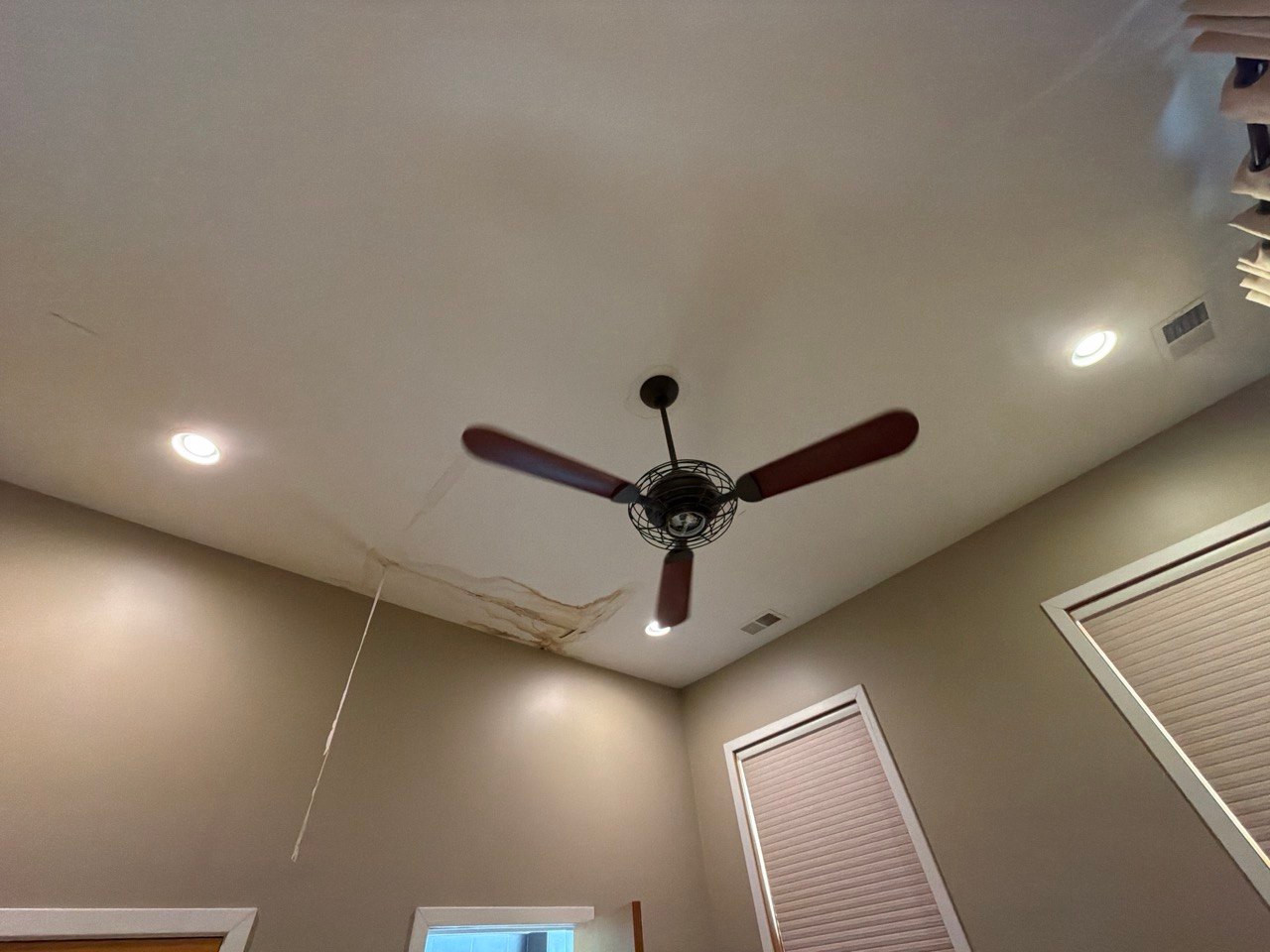
Wet drywall does not always need to be replaced. A limited clean-water incident may leave board that can be dried and refinished. Swollen, softened, sagging, or otherwise damaged drywall needs a different plan. The decision depends on the water source, how long the materials stayed wet, the condition of the board, and what is happening behind it.
Here is how to approach that decision after a leak, without relying on the size or color of the stain alone.
First, make the area safe and stop the water
Keep people away from a bulging or sagging ceiling. Do not press it, stand beneath it, or cut into it to investigate. Wet overhead material can fall; the American Red Cross warns that water-damaged ceilings can become heavy and dangerous. Get appropriate professional help before approaching an unstable area.
Water near lights, wiring, or other electrical equipment also needs attention before drywall work. The CDC advises shutting off power to wet electrical systems only from a safe, dry location and having a qualified electrician inspect them before power is restored. Never enter standing water to reach a panel.
Arrange repair of the roof, pipe, appliance, or other moisture source. Drywall finishing should wait until that source is resolved and the affected assembly is ready to close.
When drying the drywall in place may be possible
EPA's clean-water damage guidance allows wallboard to dry in place when there is no visible swelling and the seams remain intact. It also calls attention to drying the wall cavity. These guidelines concern clean water and prompt response; they are not a clearance for every leak or flood.
A contractor should consider both the visible face and the materials behind it. A dry-looking paint surface does not establish that insulation, the back of the board, or enclosed framing is dry. Ask what was checked and how the decision to retain the board was reached.
A small, old stain on otherwise sound material may ultimately need surface preparation, stain-blocking primer, and paint. Saving sound board can be reasonable when the moisture and contamination questions have been resolved.
Signs that replacement needs to be considered
Watch for changes you can see safely from the floor:
- A ceiling that sags or a panel that has visibly changed shape
- Swollen edges, opened joints, or loose layers of face paper
- Crumbling material or a previously identified soft gypsum core
- Damage that returns after another leak or an earlier cosmetic repair
USG's guidance on damaged gypsum panels explains that prolonged water exposure can soften the core and separate the paper from it. Replacement addresses damaged material that a new paint coating cannot rebuild. The repair boundary may extend beyond the visible mark to reach sound material and suitable support.
Ask the contractor to explain the proposed opening rather than judging it only against the stain's outline. A larger opening may be needed for access or installation, but the reason should be clear before work starts.
Contaminated water and mold change the next step
Do not assume water is clean because it started as rain or came from a bathroom. The route it traveled and what it contacted matter. Sewage, floodwater, an unknown source, visible growth, or a persistent musty smell calls for appropriate assessment before ordinary patching.
EPA's homeowner mold guide recommends an experienced professional for contaminated-water damage and cautions that mold may be hidden behind drywall. A finishing estimate is not a mold assessment. Clarify who is handling cleanup and drying before arranging the reconstruction work.
How soon can the repair be finished?
There is no dependable number of days based on a photograph. A small opening with accessible materials differs from an insulated ceiling cavity. EPA's 24–48-hour guidance emphasizes acting quickly to limit mold risk; it does not mean materials are automatically dry or safe when that time passes.
Request a sequence tied to conditions: source repaired, affected materials evaluated, necessary drying or remediation completed, then replacement and finishing. Compound and coatings also have their own drying requirements. A date should follow the assessment rather than replace it.
What to send for a useful drywall estimate
From a safe location, take one wide photo showing the room and one closer view of the damage. Include your city, the approximate affected size, when the leak happened, whether it has been fixed, and whether a drying or restoration company has already worked on it. Mention ceiling height and any nearby light fixtures.
EasyPatch handles water-damaged drywall repair. Send photos for a free estimate or text (312) 200-1230. Photos help start the conversation; an on-site assessment may be needed to confirm the repair and finishing scope.
