From limestone-era houses by the Riverwalk to the west-side subdivisions of the 90s and 2000s — plaster care for the Windmill City's oldest walls, seam and pop repair for its newest, and river-humidity basement fixes in between.


We'll contact you within 2 hours


The Windmill City wears its age proudly. Batavia's core grew rich on limestone quarries and windmill factories in the 1800s, and the streets near the Riverwalk still hold homes from that era — stone foundations, true plaster, woodwork nobody makes anymore. Cross to the west side and the calendar jumps a century: subdivision after subdivision from the 1990s and 2000s, built at production pace for families priced out of the towns closer to the city.
Serving Batavia means being fluent in both centuries. The historic stock needs a light touch — plaster that's held for 120 years deserves better than demolition, and stone-foundation basements manage moisture in ways modern walls never learn. The west side needs the opposite skill set: fast-built drywall now hitting the 20-to-30-year window where thin taping releases along the big ceiling spans and fasteners surface in rows. And everywhere near the Fox, humidity works on basements and grade-level rooms year-round.
We carry both toolkits on the truck. Plaster washers and lime-friendly patching for the old town; setting compound and texture rigs for the subdivisions; moisture meters for everything within a few blocks of the river.
If your walls or ceilings have dents, holes, old patch marks, rough repaired openings, visible surface differences, or areas that still look unfinished after previous work, we can inspect the condition and recommend the right repair approach. The goal is to leave the area looking clean and complete — not like it was repaired in pieces.
After a roof leak, insulation was installed and the entire ceiling drywall was replaced. The ceiling and walls were painted; the photo was taken before light fixtures were installed.
View the Batavia project →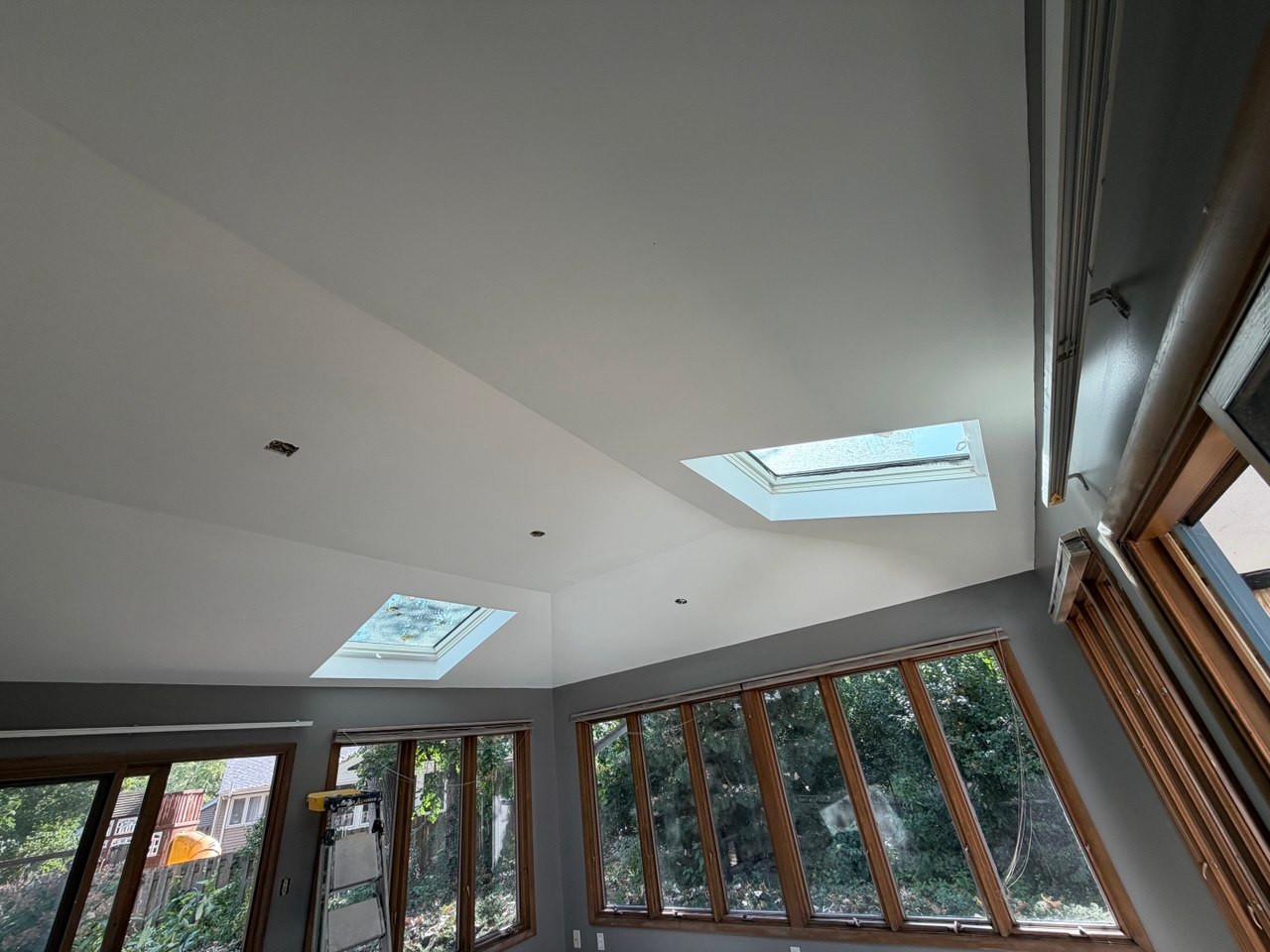
Everything else we repair around Batavia.
Both come as written numbers before any dust is made. Send photos and your city for a free quote. We confirm the repair scope and price before work starts.
Historic plaster downtown is inspected first, then quoted in writing — no surprise math on a 130-year-old wall. Send photos and your city for a free quote.
That's precisely our approach. Original plaster is a building material with another century in it when treated right: we re-anchor loose areas to the lath rather than gutting them, patch with compatible materials instead of hard modern fills that crack out, and match the subtle surface character so repairs read as part of the old wall, not interruptions in it.
It's measurably real within a few blocks of the water. Basements and grade-level rooms in the river corridor run higher ambient moisture, which over years softens board, corrodes fasteners, and pushes chalky efflorescence through finishes. Repairs there need moisture-tolerant detailing and sealed priming — plus honest advice about dehumidification, or the repair fights a losing battle.
Batavia's in our western loop, and most repairs get scheduled inside the week. Larger plaster restorations book further out after their inspection. Send photos to (312) 200-1230 — you'll get a range and a proposed date in one reply.
A moving substrate. When the same spot resurfaces through multiple repairs, the wall is telling you the movement behind it was never addressed — a flexing joint, a loose fastener field, or in older Batavia homes, plaster detached from its lath. We fix the mechanical cause first, then the cosmetic layer, which is why our version of that repair is the last one.
Because finishing speed has a price tag with a 20-year due date. Boom-era production builders taped fast and thin; the material was fine, the schedule wasn't. Around the quarter-century mark those economies come due as seam releases and fastener pops — cosmetic, predictable, and permanently fixable with an unhurried repair.
Illinois General Contractor license #TGC139780, held by TMV Services LLC — the company behind EasyPatch — with liability insurance in force and certificates available on request. Licensed for the structural-adjacent judgment calls, insured for everyone's peace of mind.
Comfortably. Investors get the same finish quality as homeowners with the logistics they actually need: batched repairs across a property in one mobilization, painter-ready surfaces on a committed date, and line-item invoices that slot into a project budget. Flips near the historic district also get plaster guidance that protects resale value.
We'll contact you within 2 hours
Fox Valley neighbors we also serve.



.avif)


