


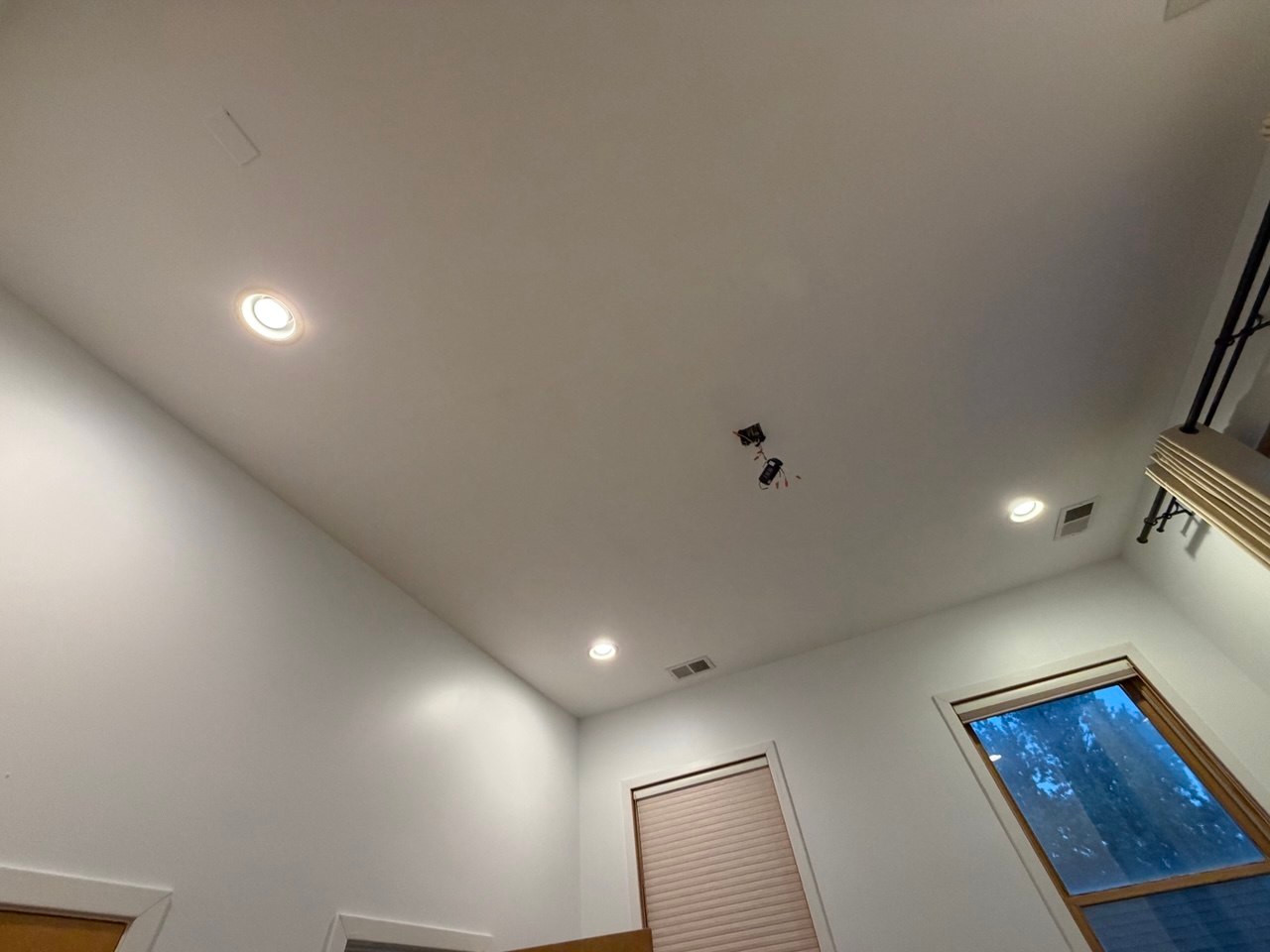
A ceiling water stain can sometimes be covered successfully with the right primer and paint. First, the leak must be resolved, the materials must be dry, and the ceiling must be sound. If the board is sagging, softened, swollen, or separating, the work starts with assessment and repair.
The useful question is what remains after the leak: a discolored finish, damaged drywall, or moisture that still needs attention. Each calls for a different next step.
Check the stain's history before choosing paint
Write down when the mark first appeared and whether it changed after rain, plumbing use, or another event. If someone repaired the leak, keep their description of the work. This gives the person assessing the ceiling more to work with than a photograph alone.
A stain that seems unchanged is useful background, but it does not prove the enclosed materials are dry. Likewise, a brown ring does not identify the source by itself. If nobody has confirmed where the water came from, investigate that before booking a cosmetic repair.
Keep clear of a ceiling that is bulging, actively leaking, or shedding material. Water around a light or electrical fitting should be handled as an electrical concern first. Have the affected area made safe before anyone prepares it for painting.
When primer and paint can be a sensible solution
Repainting may be appropriate when the leak is fixed, the affected materials have been assessed as dry, and the board and its joints remain sound. Any loose finish still needs suitable preparation. Paint should go onto a stable, prepared surface.
The remaining discoloration needs a product designed to block that kind of stain. For example, KILZ RESTORATION's manufacturer instructions identify water-damage stains among its uses and require proper surface preparation. That is an example of a stain-blocking product, not a recommendation to apply a particular primer to every ceiling.
Ask the painter which primer is being specified, whether it is compatible with the existing finish and planned topcoat, and what preparation it requires. Follow the selected product's label for ventilation, application conditions, protective measures, drying, and recoating. Different formulas have different requirements.
Why another coat of ordinary paint may disappoint
Covering a mark and blocking a stain are different jobs. A coating may hide discoloration initially without being the right product to prevent it showing through the finish. Sherwin-Williams' ceiling-painting guidance recommends a suitable primer for water damage and other stains.
More paint also cannot flatten swollen board, secure a loose joint, or correct an uneven patch. If a mark reappears after painting, have both the moisture source and the coating system reviewed. Its return does not, by itself, distinguish a new leak from a stain that was not adequately blocked.
When the ceiling needs repair before paint
Visible sagging, distorted panels, failing seams, loose paper, and damaged gypsum are reasons to assess the substrate. Do not poke or press an overhead damaged area to test it yourself. A contractor can determine whether localized replacement or a larger repair is appropriate once it is safe to inspect.
There is also a separate question if mold is present or suspected. EPA advises against painting over moldy surfaces. Cleanup and drying must come first. A stain-blocking or mildew-resistant coating does not establish that an enclosed moisture problem has been resolved.
Before sanding or scraping older finishes or unfamiliar textured materials, discuss possible lead or asbestos hazards with the contractor. EPA cautions that asbestos cannot generally be identified by appearance; suspect material should be left undisturbed pending appropriate professional advice.
Will a small painted spot blend into the ceiling?
Stain coverage and a consistent appearance are separate finish decisions. A repaired area can look different because of its texture, the paint product, the sheen, or uneven absorption between new and existing surfaces.
Sherwin-Williams' painter training guidance identifies varying surface porosity and inadequate priming as possible causes of shiny or dull patches, often called flashing. Proper preparation helps, but an exact spot match should not be assumed.
Ask whether the estimate includes only the repaired area or repainting the ceiling to its natural edges. Review a proposed match in the room's usual daylight and artificial lighting. Save the paint label if you have it; a color name alone may not identify the product and sheen.
Get the finish scope in writing
A useful estimate identifies drywall repair, surface preparation, stain-blocking primer where needed, and the area to be painted. Check whether “paint-ready” means the contractor stops before priming or before the finish coat.
For help with ceiling drywall repair, send EasyPatch photos for a free estimate or text (312) 200-1230. Include your city, the leak history, and whether you want a prepared repair or a finished painted ceiling.
