


A sagging drywall ceiling can be a warning of failure, not just an uneven finish. Keep people and pets out of the affected area, do not press or puncture it, and arrange a professional assessment. A photo cannot tell you whether a ceiling is securely attached or how soon it might fall.
In an older home, the first questions are what the ceiling is made of, what is supporting it, and whether moisture or movement has affected the assembly. This guide explains the warning signs and repair decisions, with before-and-after photos of a completed EasyPatch ceiling repair in Wheaton, Illinois.
Some ceilings can be repaired locally; wider damage or loss of attachment may require more extensive replacement. The decision depends on the material, its supports, and the condition of the surrounding ceiling.
What to do if a ceiling is sagging or has collapsed
- Keep clear. Do not stand, sleep, or work under the affected ceiling. Keep children and pets away.
- Do not test it yourself. Avoid poking, pushing, drilling, cutting, pulling down loose material, or attempting to prop it up. Do not enter the space above it to investigate.
- Get the area assessed. Contact a qualified building or ceiling professional. Framing concerns may need a structural engineer; water around wiring or fixtures needs an electrician.
- Treat active failure as urgent. If material is falling, movement is increasing, or there is immediate danger, leave the affected space. Call emergency services if anyone is injured, trapped, or in immediate danger.
The American Red Cross's home-structure guidance warns that water-damaged ceilings can become heavy and dangerous. Do not move beneath unstable material to protect furniture or take a better photo. After a collapse, adjacent areas also need assessment before cleanup or reconstruction.
Warning signs that deserve prompt attention
Look only from a safe location. Warning signs include a visible dip or bulge, new or widening cracks, cracking sounds, and rows of small circles or blisters around fasteners. These may indicate that ceiling panels are pulling away from their supports. Falling fragments or a section dropping away require immediate caution.
These signs are also identified in Building and Energy's ceiling-collapse safety guidance. The guidance is from an Australian building regulator; it is useful general safety information, not Illinois code advice. A hairline crack alone does not establish an imminent collapse, but a crack accompanied by sagging, noise, or movement needs prompt professional attention.
Why drywall ceilings can sag in older homes
Possible contributors include water penetration, unsuitable materials or loading, and installation or attachment problems. The regulator's guidance identifies these as potential causes of ceiling failure. The age of a house alone does not identify which condition is present, and a newer ceiling can fail too.
If moisture is involved: the source must be investigated and corrected before finishing. USG's guidance on water-damaged building systems emphasizes addressing the moisture source and evaluating the specific situation. A dry-looking room surface does not establish the condition of materials inside the ceiling cavity. Suspected contamination or mold needs appropriate assessment rather than being covered up.
If attachment or support is involved: the assessment must address the ceiling assembly, not just its surface. Adding paint or joint compound does not establish that loose material is secure. Do not add storage or other loads above a suspect ceiling.
Drywall and plaster are different ceiling systems
Drywall uses manufactured gypsum panels. Older homes may instead have plaster applied over lath, or a combination of original and later materials. Painted surfaces can look similar, so do not assume every older ceiling is drywall.
Plaster can separate from its backing and may require a specialist repair approach. The National Park Service's guidance on plaster ceilings explains that historic plaster may be repairable and that replacement is not always necessary. Material identification and condition should guide the plan. Do not cut a test hole yourself in an unstable ceiling.
Can the damaged section be repaired, or is replacement needed?
A localized repair may be appropriate when the problem is limited, the surrounding ceiling is sound, and the replacement or retained material can be properly supported. A larger replacement may be needed when damage, loss of attachment, or deterioration extends beyond a small area. The boundary should follow the assessment, not simply the outline of a stain or hole.
Ask your contractor to explain:
- What material is present and what appears to have failed.
- Whether the adjacent ceiling and its supports are suitable to retain.
- Whether moisture, electrical, structural, or hazardous-material work must happen first.
- Which materials will be removed and why the proposed repair reaches those boundaries.
- How the repair will respect the existing assembly, including any applicable fire-resistance requirements.
- Whether the finishing scope includes texture matching, primer, and paint, and where painting will stop.
If water was involved, our guide to when to repair or replace wet drywall covers additional questions. A cosmetic patch should not be used to conceal unresolved movement or moisture.
Before disturbing an older ceiling
Unknown coatings and textured materials deserve attention before sanding, scraping, or demolition. EPA advises that asbestos generally cannot be identified by appearance. Leave suspect material undisturbed and use a trained professional for assessment and sampling when needed. A photograph cannot confirm or rule out asbestos.
Homes built before 1978 may also have lead-based paint. EPA recommends lead-safe certified contractors for renovation work in pre-1978 homes. Discuss the building's age and proposed disturbance before work starts. These are general planning considerations, not findings about the Wheaton project shown below.
Wheaton, IL: before and after a ceiling-collapse repair
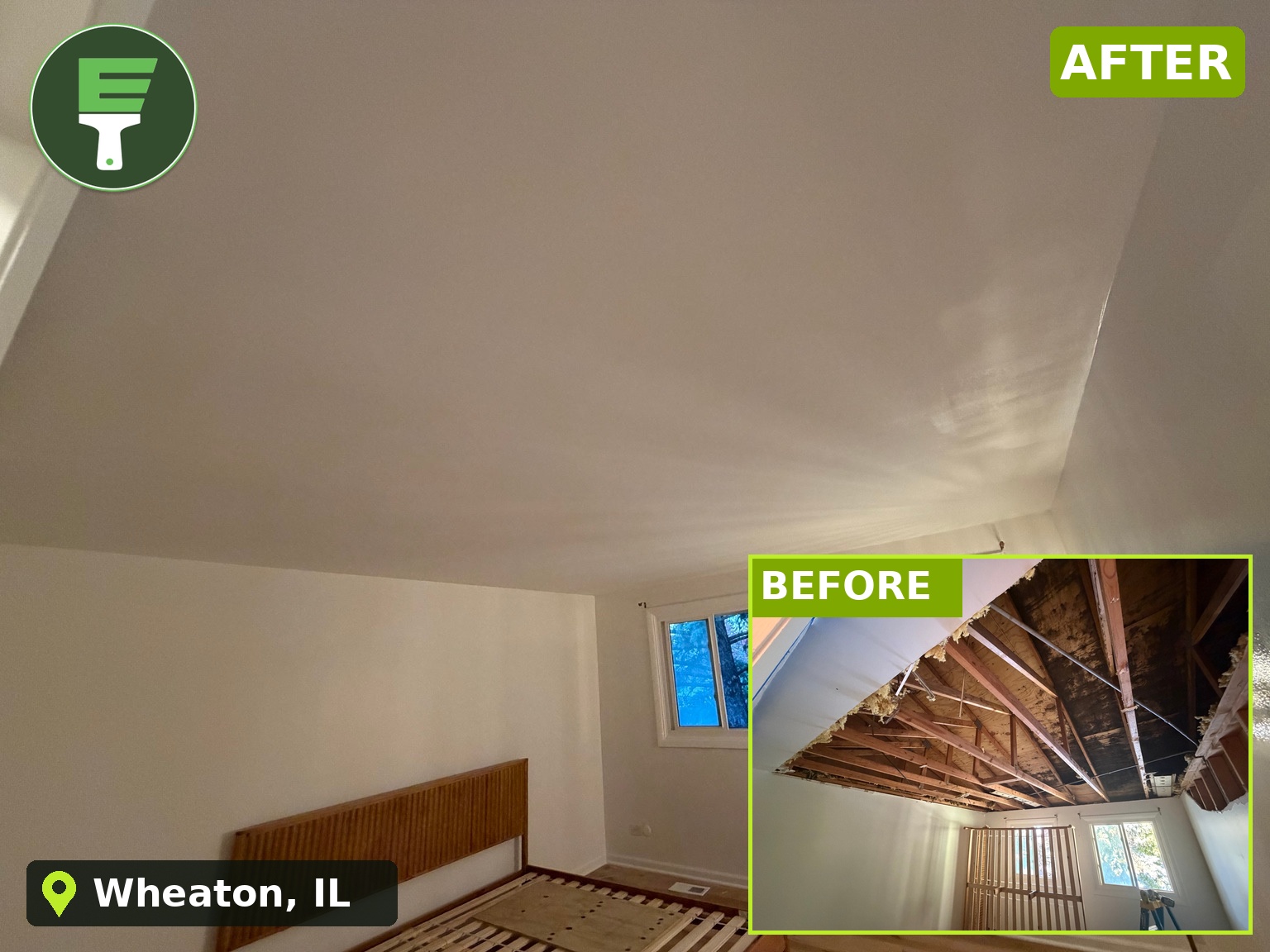
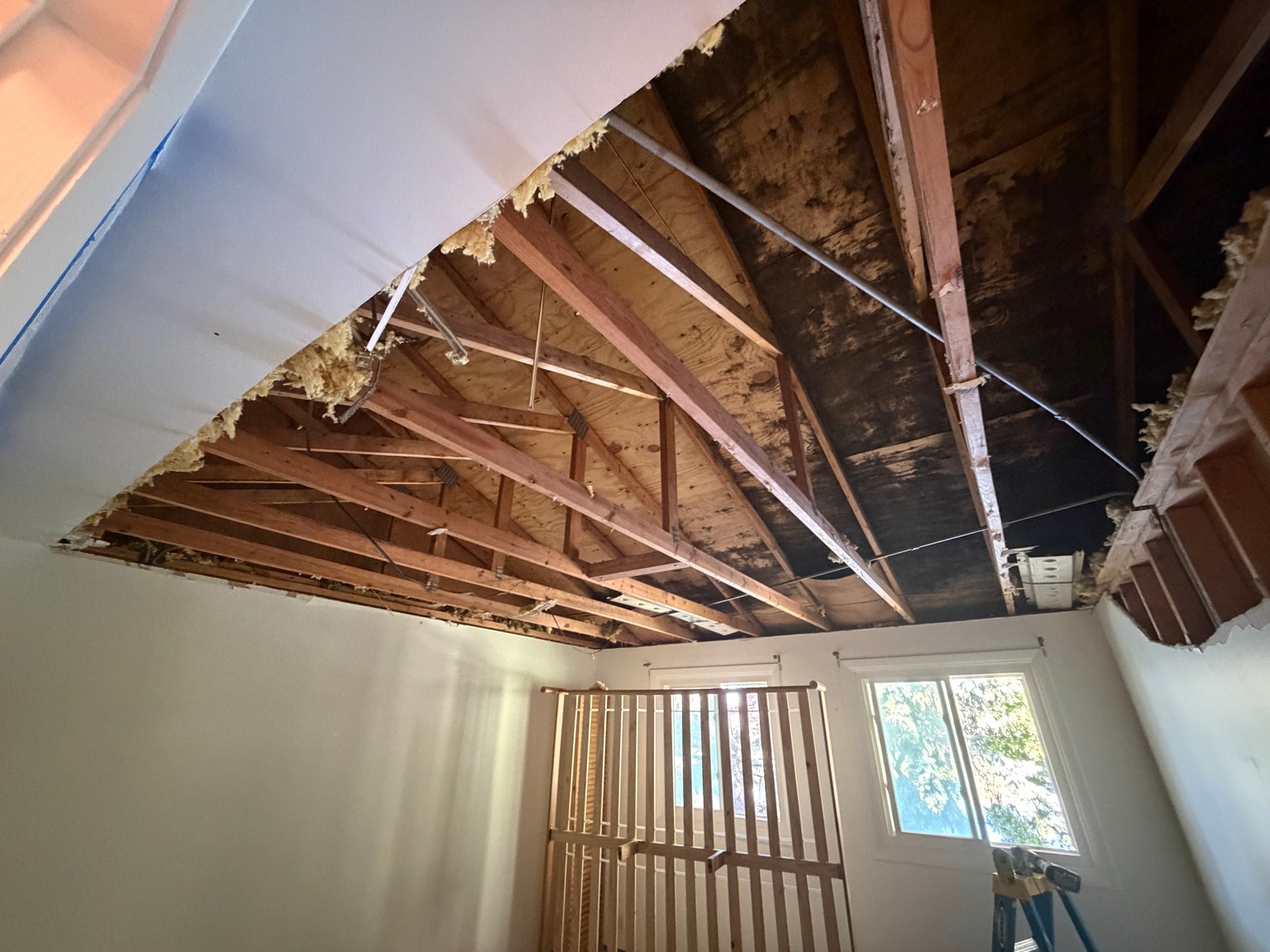
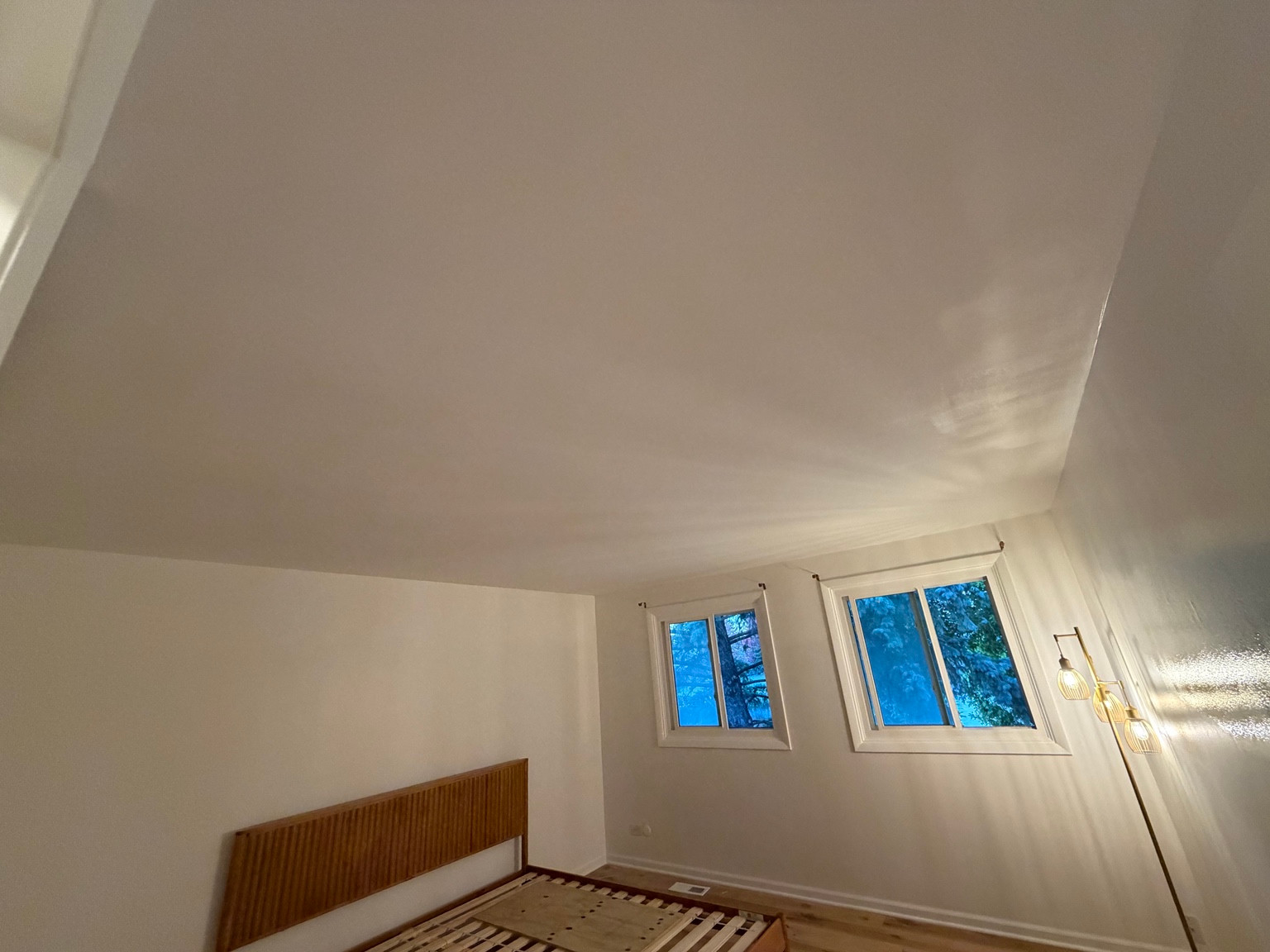
EasyPatch completed this repair after a ceiling collapsed in Wheaton, Illinois. The before photo shows the opened ceiling with framing exposed. The after photo shows a continuous white finished ceiling.
These photos show the completed repair; they do not establish why the ceiling failed.
Frequently asked questions about sagging ceilings
Can a sagging drywall ceiling collapse?
Yes. Sagging can indicate a problem that could lead to falling material. It does not reveal the cause or timing. Keep clear and arrange an assessment rather than waiting for more visible damage.
Does a ceiling need a water stain to be unsafe?
No. A visible stain is not required for an attachment or support problem. Conversely, a stain alone does not establish that a ceiling is about to collapse. Condition and movement matter.
Can you fix sagging by adding screws or painting over it?
Do not attempt that without a professional assessment. The material, supports, and reason for the sag must be understood first. Paint does not secure a loose ceiling.
Does the whole ceiling always need replacement?
No. The extent of removal depends on the condition of the damaged area, surrounding material, and supports. Some ceilings allow localized repair; others require a broader replacement or specialist work.
Can EasyPatch diagnose the cause from photos?
Photos help us review visible damage and discuss a repair estimate. They cannot verify concealed conditions or certify a ceiling as safe. An on-site assessment and, when needed, another qualified trade are separate steps.
Plan ceiling repair in Wheaton
Once the area is safe, send photos taken from a safe location, your city, approximate dimensions, when you noticed the problem, and any known leak or repair history. Tell us whether you want the repair finished with primer or painting of the repaired area.
Explore EasyPatch ceiling drywall repair and drywall repair in Wheaton, or request a repair estimate. We can discuss the visible repair scope; an estimate is not an emergency response or a structural safety inspection.
