Cracked ceilings, brown stains from past leaks, sagging plaster sections, recessed light cutouts, popcorn texture removal, and Level 5 smooth blending for Hinsdale homes from historic Tudors to newer custom builds. Serving ZIP 60521, 60522, 60523, 60527. Licensed & insured.


We'll contact you within 2 hours


Ceiling repair in Hinsdale crosses two different worlds. In pre-1940 brick Tudors, Georgian Colonials, and Prairie-style homes near Downtown Hinsdale, Robbins Park, and the 60521 historic area, original plaster ceilings show hairline cracks over door frames, sagging sections where plaster has separated from the lath, and rough transitions where drywall was patched in during past renovations. In mid-century ranches and newer custom builds across Fullersburg, The Woodlands, and the 60522 area, the calls shift to seam cracks across long ceiling runs in great rooms, screw pops in 1/2-inch ceiling board, and unfinished cutouts left after recessed lighting, HVAC, or attic-access work.
Ceiling work in Hinsdale homes also gets noticed faster than wall work because of how these houses are built. Open floor plans, taller ceilings, south-facing windows, and high-end finishes mean any imperfection — a flashed seam, a lumpy patch, a texture that doesn't quite match — is visible from across the room. That's especially true in primary living spaces like kitchen-great rooms in Robbins Park, sunroom additions in 60521, and finished basements with recessed lighting throughout. A repair that would pass on a hallway wall will not pass on a kitchen ceiling under direct daylight.
Most Hinsdale homeowners first notice a ceiling problem one of three ways: a hairline crack returns every time the room is repainted, a section starts sagging visibly between joists, or an old patch begins flashing through the paint under side light. None of those issues are cosmetic — they're signs the original repair wasn't built on a stable surface, or the underlying plaster or drywall has shifted. Painting over them doesn't last more than a season or two.
If your Hinsdale ceiling has hairline cracks along seams, sagging or bowing sections, popped screws, old patch lines that show under daylight, holes from removed light fixtures, or texture that doesn't match after previous work, we can inspect the area and recommend the right repair. The goal is a ceiling that reads as one continuous, level surface — not a patched-and-painted-over fix.
The damaged ceiling section was replaced and the joints were taped and finished. Take a closer look at the repair around the existing crown molding.
View the Hinsdale project →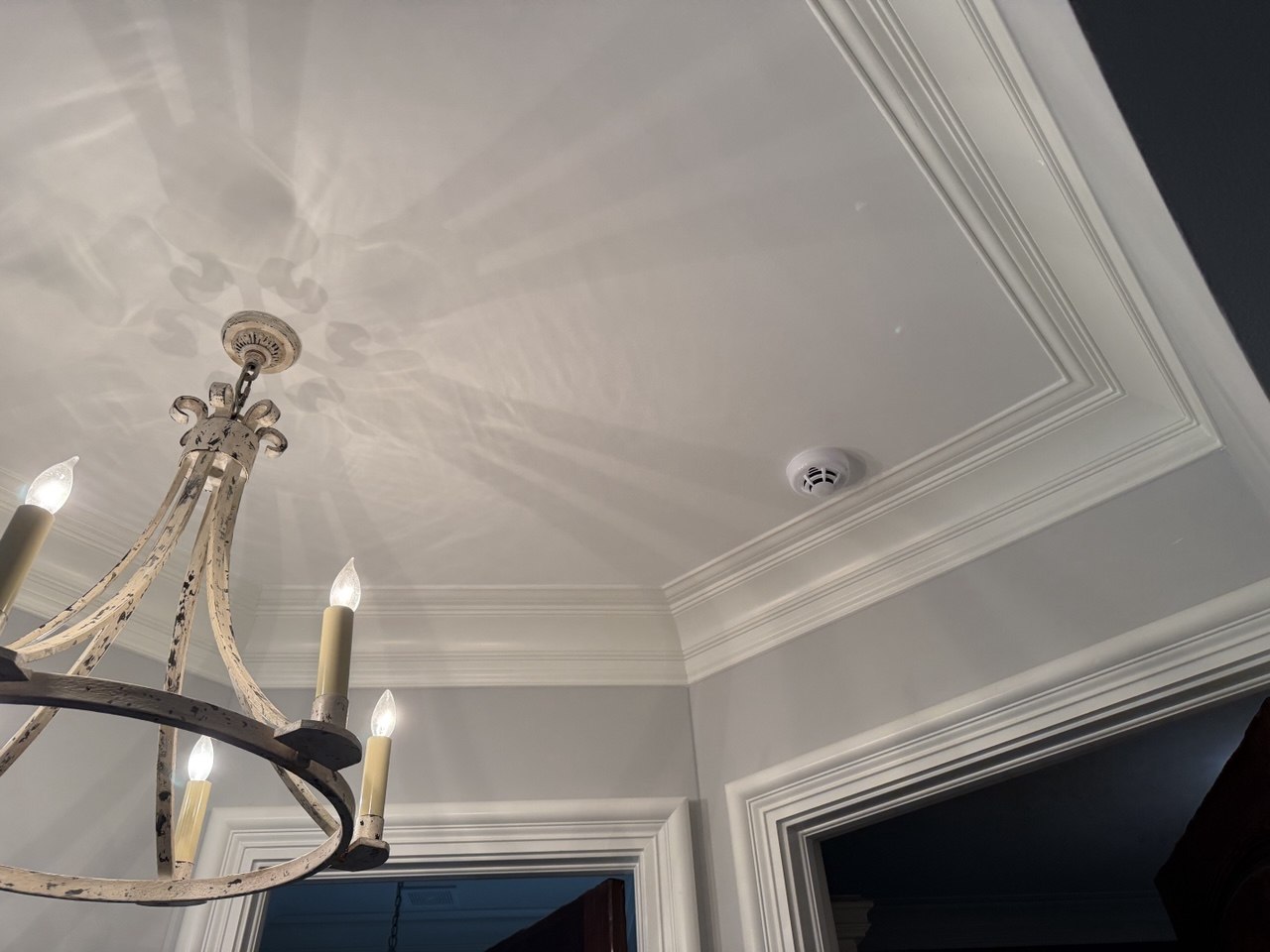
Other drywall services we offer across Hinsdale.
Ceiling repair runs slightly higher than wall work because of overhead access, ladder setup, dust containment, and the extra care it takes to blend a repair that's visible under direct daylight. Final pricing is confirmed on-site — free, no obligation. Send photos and your city for a free quote. We confirm the repair scope and price before work starts.
Hinsdale Central / D86 buyer-market homes get scrutinized harder than most listings — buyers expect premium finish. Inspectors typically flag visible plaster cracks, water stains (even old ones), sagging plaster sections, and patches that flash through paint under daylight. All are fixable in 1–4 days depending on scope. We provide itemized invoices for the closing disclosure and document the work for any buyer who asks. We coordinate access directly with your realtor if you've already moved out.
ZIP 60521 — the historic core including Downtown Hinsdale and Robbins Park — has mostly pre-1940 plaster ceilings with cracks from settling, sagging from aged lath, and decorative medallion preservation needs. ZIP 60522 — newer custom builds in Fullersburg, The Woodlands, and adjacent areas — has mostly drywall ceilings with vaulted seam cracks, recessed light radiating cracks, and tray ceiling damage. We approach each ZIP differently based on construction era and ceiling material.
Yes — teardown construction next door is a regular cause of ceiling cracks in adjacent Hinsdale homes, especially in pre-1940 plaster ceilings where the original lath is sensitive to vibration. The fix is to use flexible tape products (fiberglass mesh in setting-type compound) that absorb future vibration, plus document the damage now in case you want to pursue a claim against the construction company. We can provide a written assessment that compares pre/post-construction damage.
Yes — noisy floor squeaks in Hinsdale Tudor Revivals usually mean the floor framing is shifting slightly underfoot, which stresses the ceiling tape joints below. Repair-only ceiling work will hold longer if you address the squeak first (your floor contractor can re-secure the subfloor to joists from above). We can do the ceiling repair work without the squeak fix, but the crack may return faster without addressing the underlying movement.
Robbins Park is the most historically protected area in Hinsdale, but the Historic Preservation Commission focuses on exterior changes. Interior ceiling repair typically doesn't require Commission review. If your project includes structural changes, original plaster medallion preservation, or anything affecting the historic character documented in your plaque, we coordinate with the Commission via your architect or GC. As an Illinois-licensed General Contractor (#TGC139780), we can also pull required permits ourselves.
Yes — we do warranty drywall repair for several Hinsdale custom builders. If your home is still under structural warranty, contact your builder first to confirm the work is covered; they may use us or a similar contractor. If warranty is expired or the issue isn't covered (settling cracks are usually not), we handle the repair directly and provide documentation you can submit to the builder if you want to dispute.
Yes — newer Hinsdale custom homes often have multiple ceiling-mounted sensors (Nest smoke alarms, motion detectors, leak sensors over kitchens, hardwired smoke detectors). We document each sensor location, mask carefully, and avoid disconnecting unless absolutely necessary. If a sensor must be removed for the repair, we coordinate with you on temporarily disabling it (smoke detectors especially) and reinstalling after primer. We don't modify the wiring; that goes to your electrician if needed.
Spring is the right time to check Hinsdale ceilings after winter freeze-thaw cycles. Walk each room with side lighting and look for: hairline cracks above doors and windows (settling), brown stains around recessed lights (ice dam leaks), bubbling paint near HVAC vents (condensation), sagging panels in garage ceilings (fastener fatigue), and visible tape lines flashing through paint. Catch issues in March–April and the repair can be done before summer humidity makes drying time longer. We do annual spring inspection appointments for repeat customers — typically a 60-minute walkthrough with on-the-spot priority recommendations.
We'll contact you within 2 hours
We also provide drywall repair in nearby Chicagoland suburbs.



.avif)


